Hyperpolarized MRI Calibration: GSP's Role in the CHARM Project
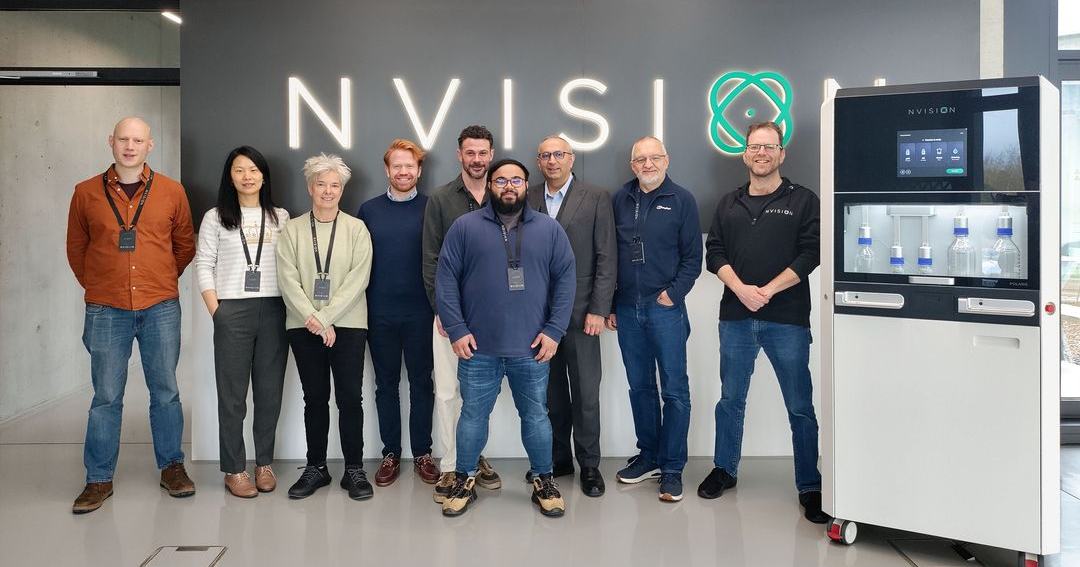
Gold Standard Phantoms is collaborating with UCL and NVision on the Innovate UK-funded CHARM project, developing a dedicated calibration phantom and online platform to make hyperpolarized MRI measurements more reliable, traceable and comparable across hospitals.
What if the same tumour produced different MRI measurements simply because it was scanned at a different hospital?
Hyper-polarized MRI: A New Quantum-based Technology to boost MRI signal
Hyperpolarized magnetic resonance imaging (MRI) offers a promising way to measure metabolic activity in living tissues, potentially helping researchers assess cancer aggressiveness and monitor treatment response. However, differences between MRI scanners, protocols and environmental conditions can make these measurements difficult to compare across hospitals. At Gold Standard Phantoms (GSP), we are addressing this challenge through CHARM, an Innovate UK-funded research project, in collaboration with University College London (UCL) and NVision Quantum Technologies. Together, we are developing a scalable calibration solution designed to make hyperpolarized MRI measurements more accurate, reproducible and comparable across research centres.
The Challenge: Making Hyperpolarized MRI Measurements Comparable
Hyperpolarized MRI enables researchers to observe metabolic processes within tissues, including those associated with cancer. However, quantitative measurements can vary between scanners, even when the same metabolic process is being examined. Differences in scanner hardware, imaging protocols and temperature can introduce variability that makes results difficult to interpret. This is particularly problematic for multicentre clinical trials, where measurements from different hospitals must be combined and compared reliably. Without standardised calibration, differences between scanners could be mistaken for meaningful biological differences. CHARM aims to overcome this challenge by establishing a consistent, traceable calibration approach for hyperpolarized metabolic MRI.
GSP's Solution: Combining a Calibration Phantom with an Online Platform
As part of CHARM, GSP has developed a dedicated hyperpolarized MRI calibration phantom, a physical reference device that allows researchers to assess how accurately an MRI scanner measures a controlled metabolic reaction. Unlike conventional quality assurance procedures that primarily check whether a scanner operates correctly, GSP's approach aims to identify and correct differences in quantitative measurements between scanners. To achieve this, we are also developing an online calibration platform that will work alongside the phantom and NVision's POLARIS technology. The process is designed to work as follows:
- Reference measurement: GSP's phantom provides a controlled metabolic reaction that can be measured using an MRI scanner. NVision provides the standardised metabolic test kit to be used.
- Data processing: Measurements are uploaded to GSP's online platform, which will process the data, account for relevant factors such as temperature and track measurement provenance.
- Calibration correction: The platform will generate scanner-specific calibration files for use within NVision's analysis software, helping make measurements comparable across imaging centres.
Together, the phantom and software aim to make quantitative MRI calibration more reliable, traceable and scalable. This work builds on GSP's wider expertise in custom MRI phantom development and calibration solutions.
CHARM's Achievements: Progress Towards Cross-Site Calibration
The collaboration has already reached several important technical milestones:
- Phantom development and testing: GSP's calibration phantom has been tested on a Siemens 3T MRI scanner, successfully detecting a controlled metabolic conversion. Initial testing has also taken place on a Philips 3T system.
- Multicentre data collection: Calibration measurements have been collected at UCL and the Technical University of Munich, providing a foundation for future cross-site validation.
- Scalable hyperpolarization: NVision's POLARIS system generated more than 100 hyperpolarized doses during a three-week deployment at UCL.
- Shared analysis workflow: The consortium has integrated UCL's analysis pipeline into NVision's post-processing software to support more consistent data analysis.
These achievements demonstrate the feasibility of the approach and establish the groundwork for evaluating how effectively calibration can reduce measurement variability between scanners.
What's Next: Towards Reliable Multicentre Clinical Studies
GSP's next priorities are to complete the online calibration platform, integrate it with NVision's analysis software and finalise the phantom design for repeatable manufacturing. Further evaluation using data collected at UCL and Munich will help determine how effectively the calibration approach improves measurement consistency. For researchers, the intended benefits include more comparable measurements, improved traceability and reduced time and specialist effort required for calibration. While prostate cancer is an initial focus, the same approach could eventually support research into other cancers, neurological conditions and cardiovascular diseases. CHARM demonstrates that developing advanced imaging technology is only part of the challenge. Making its measurements reliable and comparable is equally essential. By combining NVision's hyperpolarization technology, UCL's clinical research expertise and GSP's specialist capabilities in MRI metrology and calibration, the consortium is working towards a complete solution for scalable hyperpolarized MRI. At Gold Standard Phantoms, our ambition is to make reliable calibration an integral part of advanced MRI research and its future clinical applications.
Learn more:
Read NVision's original article on the CHARM collaboration.
Explore GSP's research projects or contact our team to discuss your MRI calibration requirements.
Need Reliable Calibration for Your MRI Research?
Whether you're working on hyperpolarized MRI, multicentre clinical studies or other advanced imaging applications, Gold Standard Phantoms can help you explore calibration solutions tailored to your research needs.